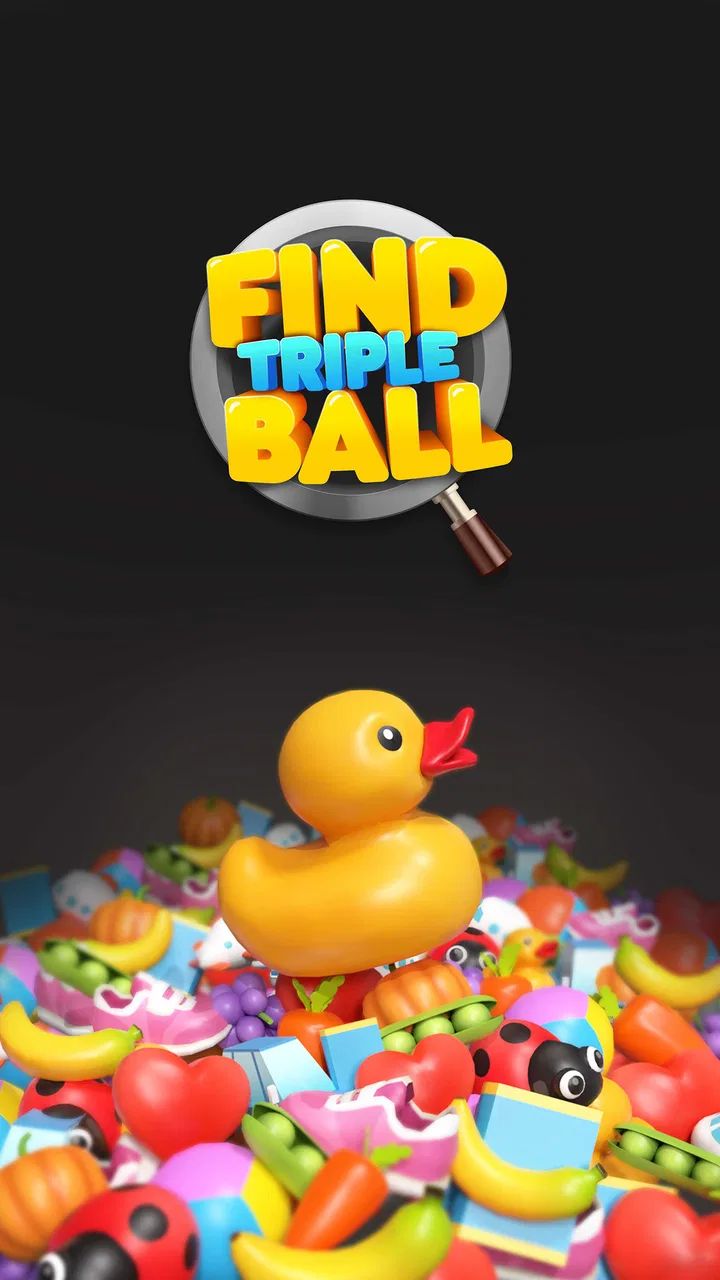
Find Triple Ball: Match Triple
- 4.6
- Rating
- 50.00K
- Installs
- Free
- Price

 Analysis by App-foxy
I spent time with Find Triple Ball: Match Triple as a quiet, pick-up-and-play board game, and my main impression is simple: it works best when I want a short visual sorting session rather than a deep puzzle challenge. The idea is easy to understand, the three-dimensional presentation gives the familiar matching formula more personality, and the pace makes it comfortable to play in small gaps during the day. It is free to start, aimed at Everyone, and available for Android devices using Android 8.0 or later.
That accessibility is also the game’s defining trade-off. I found it relaxing because it does not demand a long explanation before the first move, but players looking for elaborate strategy, a strong narrative, or the competitive depth of a traditional board game may find it too light. In my experience, its appeal comes from the physical feeling of scanning a crowded space, spotting three related objects, and clearing them before the board becomes difficult to read.
What the matching experience feels like in practice
The core loop is built around finding hidden three-dimensional objects and matching groups of three. That sounds familiar, but the 3D arrangement changes how I approach each turn. Instead of reading a flat grid from left to right, I have to inspect the scene, notice objects that may be partially surrounded, and decide whether a visible item is worth selecting now or leaving for later.
You May Also Like

 Blood Strike: 2.5 Anniversary
Blood Strike’s Loadouts Turn Every Drop Into a Tactical Gamble
A close look at Blood Strike’s custom loadouts: how fast access to signature weapons reshapes its battle royale rhythm, rewards preparation, and narrows the gap between fights.

 Pandora - Music & Podcasts
Pandora’s Music Is Easy to Start, but Harder to Recover
Pandora’s strength is its low-effort path from a seed to a station. Its weak spot is how much confidence it asks you to place in connection, setup, and quiet recovery.

 8 Ball Pool
 Is Built on Rivalries, Rematches, and Routine
A close look at the rivalries, rematches, shared routines, and unanswered safety questions that turn a quick pool match into a persistent mobile community.

 Samsung Music
’s Quiet Strength Is Playing What You Already Own
Its reach comes less from spectacle than from dependable access to a personal library. That simplicity is both the app’s strongest retention engine and its ceiling.

 AccuWeather: Weather Radar
AccuWeather Review: A Quick, Clear Forecast for Everyday Decisions
For everyday plans, the best forecast is the one you can understand quickly. AccuWeather makes rain timing, radar, and local conditions easy to act on, with a few trade-offs.

 Hill Climb Racing
Why Hill Climb Racing Still Turns Crashes Into One More Run
A tiny car, a bumpy hill and one more upgrade: Hill Climb Racing keeps resurfacing because its simple chaos makes every near-miss feel personal.
More From Our News Desk
View All News


This creates a gentle form of planning. A quick match can open space and reveal more of the board, while an impulsive selection can make the tray or available choices harder to manage. The game does not need complicated rules to create that tension. The challenge comes from visual attention, order of removal, and resisting the urge to tap the first attractive combination I notice.
I especially liked the difference between casual scanning and deliberate searching. When I played while taking a short break, I could make progress by focusing on obvious groups. When I had more patience, I looked for less noticeable objects and tried to preserve useful options. That makes the same basic activity feel slightly different depending on my mood, even though it remains a straightforward matching game.
The 3D presentation is more than decoration because it affects how information is processed. Objects can blend into a busy arrangement, and the best move is not always the group that catches my eye first. I found myself rotating my attention around the scene, checking edges and gaps before committing. That small change gives the game a more tactile quality than a standard tile-matching board.
The title’s “triple” focus also keeps the objective clear. I am not memorizing a long rule set or learning a collection of special abilities. I am looking for three compatible objects and trying to make each selection contribute to a clean board. For someone who likes order, the satisfaction is immediate: a cluttered arrangement becomes easier to read after a successful match.
Why it works well for short sessions
The strongest practical advantage is how quickly I can begin playing. There is no need to reserve a large block of time or remember a complicated campaign. I can open it during a commute break, while waiting for an appointment, or after finishing a small household task. A few minutes of searching and matching gives me a clear stopping point, which is useful when I do not want a game that pulls me into a lengthy commitment.
A realistic everyday use is a short evening reset. After answering messages and finishing chores, I might play a few rounds with the sound lowered, concentrating on the objects rather than on a demanding story or a competitive ranking. The visual search gives my attention something specific to do, while the simple rules keep the session from feeling like more work.
It is also suitable for players who prefer games that explain themselves through interaction. The basic goal is understandable almost immediately, so I do not need to study instructions before deciding whether I enjoy it. That makes it a reasonable choice for a family tablet or for someone who does not usually play board games on a phone.
The Everyone content rating supports that broad accessibility. I would still treat it as a personal preference question rather than a guarantee that every player will enjoy it. Younger users may appreciate the object-finding element, while adults who want a serious strategic contest may regard the same simplicity as a limitation.
The visual search is the real source of difficulty
One useful way to approach the game is to stop thinking of it as a speed test. I had better results when I scanned the whole arrangement before tapping. I looked for repeated shapes, colors, and object types, then considered which match would leave the clearest next step. This is more reliable than chasing whichever item is most prominent.
Another helpful habit is to treat the board as a set of future possibilities. If I saw two matching objects but only one likely partner, I did not always select them immediately. I first checked whether a more complete group was available elsewhere. That small pause reduced the number of awkward selections and made the board feel less random, even though the game remains casual.
I also found value in checking areas that initially seemed unimportant. Objects near the outside can be easy to ignore because they do not look buried, yet removing them may expose a more useful path through the center. Conversely, clearing a central object too early can leave a less convenient collection of choices. The game rewards observation more than frantic tapping.
These are not advanced mechanics in the sense of a complex strategy title, but they are meaningful playing tips. They explain why the experience can remain pleasant after the novelty of the 3D objects fades. The player gradually develops a better visual routine: scan, identify a complete group, consider what becomes visible, and only then commit.
Where the relaxed design starts to feel limited
The same simplicity that makes the game welcoming can make it feel repetitive for experienced puzzle players. The central action remains finding groups of three, so anyone expecting several distinct modes or a dramatic change in rules may want something more ambitious. I would not choose this as my main game if I wanted a long-term strategic hobby with constantly evolving systems.
The visual clutter can also become friction rather than fun. A crowded 3D arrangement is satisfying when I gradually understand it, but it can be tiring when several objects look similar or sit close together. Players with smaller screens may need more patience because the search depends on distinguishing details in a compact display. I found that the game is most comfortable when I play with a clear view and avoid rushing.
There is another trade-off in the free-to-play structure. The game itself is free, but optional in-app purchases range from $0.99 to $99.99 per item. That wide range means I would approach any purchase carefully and decide in advance whether I am happy to remain within the free experience. For a relaxing matching game, I prefer not to feel pressured into spending simply to maintain the mood of a short session.
This is also why I would not recommend it automatically to someone who dislikes optional purchases in free games. The right expectation is that the download costs nothing, while additional purchases are available. If that arrangement is acceptable, the game is easy to try. If a player wants a completely purchase-free experience, a paid alternative or a simpler offline puzzle may be a better fit.
How it compares with familiar board and puzzle alternatives
Compared with a traditional match-three game on a flat board, this title puts more emphasis on object recognition and spatial scanning. A conventional grid is usually easier to read at a glance because every position is fixed. Here, the three-dimensional arrangement gives the search more character, but it can also require more careful inspection. I would pick this game when I want to look around a scene rather than make rapid moves on a predictable grid.
Compared with classic tabletop matching games, it removes the need to set up pieces, track a physical layout, or find another person to play with. That convenience is valuable when I want a solitary activity. The compromise is that the phone provides the structure and pacing, so it does not offer the same social interaction or tactile feel as handling real cards or tiles around a table.
Compared with a serious strategy board game, the difference is much larger. This is about recognition, selection, and light planning, not negotiation, resource management, or layered decision-making. I see it as a wind-down game rather than a replacement for a full board-game night. Someone who enjoys modern tabletop systems may appreciate it as a snack-sized diversion, but should not expect comparable depth.
It also occupies a different space from fast arcade games. The appeal is not reflex speed or constant action. I can play slowly and still engage with the board, which makes it a better choice for a calm break than for an adrenaline-filled session. That distinction helped me understand its audience: it is for people who enjoy tidying visual disorder, not necessarily for players who need excitement every few seconds.
Who should install it, and who should skip it
I would recommend it to casual puzzle fans who enjoy hidden-object searches, simple matching rules, and short sessions. It is particularly suitable for someone who wants a game that can be understood quickly but still rewards a little planning. The three-dimensional presentation gives the familiar formula enough variation to make it feel more active than simply tapping identical icons in a flat row.
It may also suit players who use mobile games as a mental pause. The process of scanning, comparing, and clearing objects is focused without being overwhelming. I found that it gave me a clear task when I wanted to step away from more demanding apps. The experience is not completely mindless, but it does not require the emotional investment of a story-driven game.
I would skip it if my priority were deep strategy, multiplayer competition, or a substantial progression system. I would also be cautious if visual clutter quickly frustrates me, because the 3D presentation is central to both the charm and the challenge. Players who prefer fixed grids may find a conventional match-three title more comfortable and easier to read.
Device compatibility is reasonably broad for Android users because the minimum requirement is Android 8.0. The current release is version 2.0.1, so I would make sure my device is updated enough before installing. On iOS or Android, my recommendation remains the same: try it when the idea of finding groups of three in a busy 3D space sounds relaxing, not when you are searching for a complex board-game simulation.
What its reception and developer background suggest
The game comes from BRAINWORKS PUBLISHING PTE. LTD. and has reached over 50 thousand installs. Its average rating is 4.6 from 578 ratings, with 113 written reviews. Those figures suggest that the straightforward matching concept has connected with a meaningful group of players, while the written feedback is still limited enough that I would treat the rating as an encouraging signal rather than a complete picture of every device and play style.
Its release date was March 9, 2023, and the current version indicates that the game has continued beyond its initial launch. I see that as useful context for someone deciding whether to try it, but the more important question is still personal: do you enjoy visual search and gradual clearing? A strong rating cannot make a repetitive genre feel deeper if that is not the kind of game you want.
The free price lowers the risk of finding out. I can test the basic experience without paying at the start, then decide whether the presentation and rhythm are worth keeping. I would avoid making purchases during the first session, because the best way to judge this game is to see whether the core search loop remains enjoyable after the first impression.
My final recommendation
After playing it, I see Find Triple Ball: Match Triple as a polished-feeling casual board game built around one clear pleasure: turning a confusing 3D collection into neat groups of three. Its strongest qualities are immediate accessibility, a calming pace, and a visual search layer that gives a familiar matching idea more personality.
Its weaknesses are equally clear. The formula may not provide enough variety for players who need deep strategy, and the busy arrangements can become tiring when I want effortless play. The presence of optional purchases, including items from $0.99 up to $99.99, also means I would keep spending deliberate rather than automatic.
My recommendation is specific: install it if you want a quiet, visually focused game for short breaks and enjoy making order out of clutter. I would choose a different board or puzzle game for competitive play, richer tactics, or a more social experience. For the right player, though, this is an easygoing little diversion that earns its place on a phone by making a familiar matching task feel pleasantly three-dimensional.
FAQs for Find Triple Ball: Match Triple
01What is Find Triple Ball: Match Triple, and how is the gameplay?
Find Triple Ball: Match Triple is a casual matching puzzle game focused on finding and grouping three identical ball items. During each level, you search through a colorful collection of objects, tap matching pieces, and clear them from the board. The controls are simple to learn, but later stages become more challenging as the layout gets busier and the available moves require more careful planning.
02Is Find Triple Ball: Match Triple free to download and play?
The game can generally be downloaded and played for free, making it easy to try without an upfront purchase. However, free-to-play puzzle games commonly include optional advertisements and in-app purchases, such as boosters, extra chances, or other helpful items. Before downloading, it is worth checking the current store listing for the exact purchase options and considering parental controls if children will be playing.
03Does the game require an internet connection?
Some parts of Find Triple Ball: Match Triple may work without a constant internet connection, which is convenient when playing during travel or in areas with weak reception. Nevertheless, advertisements, daily rewards, cloud synchronization, updates, and certain events may require access to the internet. Offline availability can also vary between versions, so players should test the game after installation rather than assume every feature works offline.
04Are there hints, boosters, or ways to recover from a difficult level?
Yes, matching games of this type usually provide assistance when the board becomes difficult. Find Triple Ball: Match Triple may offer hints, shuffle functions, extra slots, or other boosters that help reveal a possible triple or prevent an immediate failure. These tools are useful, but they are often limited and may be earned through gameplay, rewarded advertisements, or optional purchases, so using them strategically is important.
05Is Find Triple Ball: Match Triple suitable for children and all players?
The straightforward tap-and-match mechanics make Find Triple Ball: Match Triple accessible to many ages, and it does not require complex controls or advanced gaming experience. Still, parents should review the age rating, advertising content, privacy information, and in-app purchase settings before allowing younger children to play. The increasing difficulty can also make some later levels frustrating for players who prefer very relaxed, pressure-free puzzles.
Pros
- Simple matching rules make the game easy to learn.
- Short levels fit well into quick breaks.
- Bright visuals make objects easy to identify.
- Progressive challenges help maintain interest.
- Offline play is useful when no connection is available.
Cons
- Later stages can feel repetitive after extended play.
- Small objects may be difficult to spot on smaller screens.
- Some levels rely heavily on guessing item positions.
- Hints and boosters may be limited without extra rewards.
- Frequent advertisements can interrupt the playing flow.

Find Triple Ball: Match Triple
Gallery